Earning Your Way Across
The gap between the range and the course isn't something you think your way across. It's something you earn your way across — with the kind of practice that doesn't feel productive until it does.

I wrote a few weeks ago about standing on the first tee at TPC Scottsdale with a driver that had been working on the range. It wasn't. I topped it into the bushes. Breakfast ball.
The takeaway wasn't that I choked. It was that the range had given me confidence my game hadn't actually earned. The feel was real. The transfer wasn't. I knew what the gap was — between understanding something and owning it — but I didn't yet know what kind of practice actually closes that gap.
This post is about that.
You don't accidentally break 100 after shooting 115 for months. You don't accidentally drop from a 25 to a 15. I worked for eight months to make that move. My lowest round is 82. I've been close to breaking 80. Close. I haven't done it yet because I haven't earned it.
Performance and learning are not the same thing
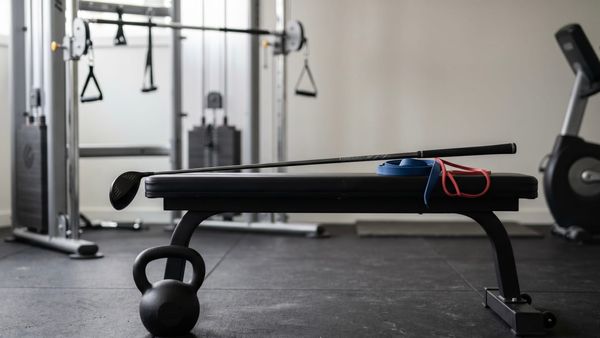
The range session that felt so good was blocked practice. Same club. Same mat. Same target. No variation. No consequence. No one watching. I was building comfort, not capacity.
That kind of practice produces high performance in the moment and almost zero transfer to the course. You hit the ball well. You feel like you're improving. You're not. You're just getting better at performing in conditions that will never exist when it matters.
The practice that actually builds durable, pressure-resistant skill feels worse while you're doing it. Variable conditions. Changing clubs and targets. Consequences that raise the stakes. It's messier. Less confident. More frustrating. And it's the only kind that survives the walk from the range to the first tee.
The golfer's instinct — to groove one feel until it's automatic — is backwards. The practice that feels productive is the practice that lies to you.
Josh Allen had to tear his throw apart
Josh Allen came out of Wyoming as a first-round pick with a cannon for an arm and throwing mechanics that didn't match it. He completed 52.8 percent of his passes as a rookie. The talent was obvious. The consistency wasn't.
In the 2020 offseason, he worked with quarterback coach Jordan Palmer. They used a system called Dari Motion — 15 cameras that mapped his throwing motion frame by frame and compared it to the sequencing of other quarterbacks.
What they found: Allen's arm and elbow were firing before his hips engaged. He wasn't using his legs in the throw at all. The correct sequence is hips, then torso, then elbow, then hand. He'd been getting away with arm talent. It worked until it didn't.
So he tore the motion down and rebuilt it. The process was uncomfortable. For a while, throwing felt worse. Not because he was regressing — because he was rebuilding. He had to feel like a worse quarterback before he could become a better one.
In 2020, his completion percentage jumped to 69.2 percent. He wasn't trying harder. He wasn't believing in himself more. He had rebuilt the pattern. And he couldn't have done it by feel alone. The cameras showed him a gap between what he thought he was doing and what was actually happening. Jordan Palmer gave him the structure. The technology gave him the feedback. Allen gave the willingness to sit in the discomfort. All three were necessary.
Steph Curry called it the worst summer of his life
Steph Curry didn't arrive in the NBA with the shot he has now. He built it.
As a high school freshman he was 5'6" and 130 pounds. He shot from his waist — a common adjustment for smaller players who need extra power to reach the rim. It worked at that level. His father Dell, who played in the NBA, knew it wouldn't survive the next one. Taller defenders. Faster closeouts. A release point that low would get swallowed.
So the summer before his sophomore year, they tore the shot down. Moved his release from below his chest to above his eyes. Started over with form shooting from close range and gradually expanded outward.
Curry has said it was the worst summer of his life, basketball-speaking.
The practice that built the most dangerous shooting stroke in NBA history felt terrible while it was happening. He wasn't getting worse. He was rebuilding. And he couldn't see that from the inside. His father could.
Later, Curry's trainer Brandon Payne took the principle further. In one offseason, he revealed that Curry only counted swishes as makes. Regular makes didn't count. The standard in practice was set above the standard in games — so that when the games came, they felt easier. Transfer by design.
What both stories share
Allen and Curry didn't improve by practicing more of what already felt comfortable. They improved by tearing down patterns that worked at one level and rebuilding them to survive at a higher one.
Both had someone who could see what they couldn't. Allen had Palmer and the cameras. Curry had his father and later Payne. Neither could have fixed the problem by feel alone — the very thing that felt right was the thing that was wrong.
Both went through a period where practice felt like failure. That failure was the learning. The discomfort wasn't a sign they were doing it wrong. It was a sign they were doing the thing that actually transfers.
The golfer on the range hitting the same 7-iron to the same target is getting the same false confidence Allen had when his arm talent was covering for broken mechanics. It feels productive. It looks productive. It produces almost zero transfer to the course.
Feel is not evidence
The hard process of mechanical change doesn't happen through willpower or through repeating what already feels right. It happens when you have coaching that understands the mechanism and feedback that shows you what feel alone can't reveal.
And it requires the willingness to sit in the discomfort of a process that feels like regression before it becomes durable skill.
I ended that earlier post by saying the gap between the range and the course isn't something you think your way across. It's something you earn your way across.
Earning your way across means practicing in a way that often feels worse. It means accepting that the sessions that leave you frustrated may be the ones that actually build something that survives the first tee. It means finding someone or something that can show you the gap between what you feel and what's actually happening — because you can't see it from the inside.
I'm not there yet. I still love the range session where everything clicks. I still walk to the first tee hoping that feel will follow.
But I know what the gap is now. And I know what kind of practice actually closes it.
The one that doesn't feel productive. Until it does.
Uncomfortable practice gives you the confidence to stand over that 145-yard shot — pin tucked behind a greenside bunker, 135 to carry the sand. You earn that confidence. It doesn't mean you'll pull it off. You might shank it. Leave it short. End up in the bunker. Then you earn something else: a par instead of a birdie, or an up-and-down for bogey that keeps you from a double. All of it is earned. We see Josh Allen fire a laser to the back of the end zone while sprinting right, tight-roping the sideline. We see Steph Curry hit the last-second three from 30 feet with a hand in his face. We don't see the thousands of reps that earned them the right to be in that moment. The highlight is the dividend. The earning happened off-camera.