
Most Golfers Are Trying to Install Software on Hardware That Can’t Run It
Understanding a swing change isn’t the same as executing it. Most golfers chase mechanics their bodies can’t support and wonder why it doesn’t stick.
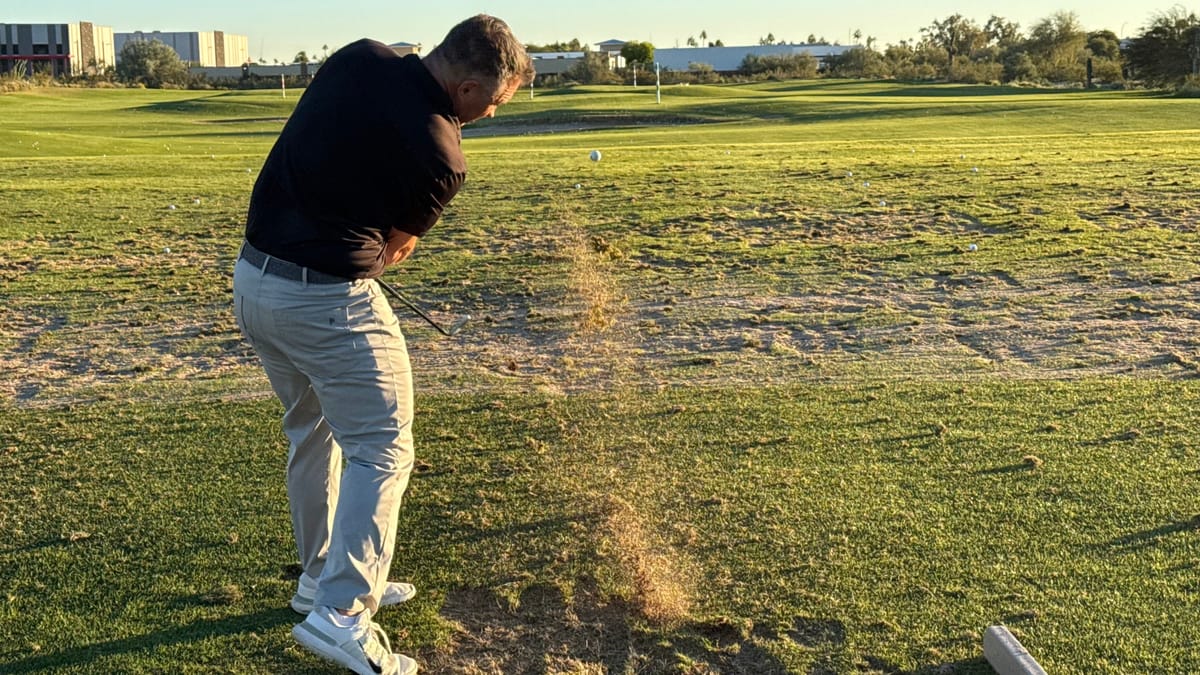
Why chasing mechanics your body can’t support is the fastest way to stall improvement
Golfers have never had more access to swing advice.
YouTube tips. Instagram reels. Slow-motion breakdowns of Tour players.
The problem isn’t the information. It’s that most of it assumes a body the average golfer doesn’t have.
Understanding a swing change isn’t the same as being able to execute it. And executing it once isn’t the same as repeating it under speed, fatigue, or pressure.
That gap is where improvement quietly breaks down.
Your body is the operating system
Every golf swing runs on a physical system.
Mobility.
Stability.
Balance.
Tolerance for posture and rotation.
That system determines which movements are available to you and which ones are not.
Years of sitting, limited rotation, and reduced load tolerance shape that system long before mechanics ever enter the conversation. Those adaptations don’t disappear just because a swing tip makes sense or looks good on video.
When instruction ignores the system executing the swing, it often asks the body to do something it cannot sustain.
The body responds the only way it can.
It adapts.
The YouTube problem isn’t bad advice
It’s unsupported mechanics
Most online instruction isn’t wrong.
The positions are real.
The movements work.
Elite players actually do those things.
The issue is those movements assume physical capacity most golfers don’t have.
When a golfer with limited mobility, reduced posture tolerance, or restricted rotation chases mechanics designed for a different system, the body has to fill in the gaps. It does so through compensation.
This is why swing changes often feel great in theory and unstable in reality.
The body isn’t resisting improvement.
It’s protecting itself.
Compensations aren’t mistakes
They’re solutions
Compensations are often treated as flaws to eliminate.
In reality, they’re intelligent responses to constraint.
When the body can’t rotate enough, it finds another way to deliver the club.
When posture can’t be sustained, it adjusts.
When stability is limited, timing takes over.
Your swing isn’t lying to you.
It’s adapting to what your system allows.
This is why golfers can hit good shots with swings that look unconventional. And it’s why forcing model positions without addressing constraints rarely holds.
Why chasing mechanics usually backfires
Many improvement attempts focus on removing the visible compensation.
Stand up less.
Slide less.
Get shallower.
Rotate more.
But if the underlying limitation remains, the compensation simply returns. Sometimes immediately. Sometimes later, when speed or pressure increases.
This is why a golfer can look “fixed” on the practice range and broken on the course. The range allows conscious control. The course demands unconscious execution. And when the system can’t support the move unconsciously, compensation takes over.
You can’t remove a compensation without removing the reason it exists.
The real divide
Mechanics without capacity vs mobility without context
This is where most golfers unknowingly split their efforts.
They either:
- chase mechanics their bodies can’t support
or
- work on mobility without connecting it to how they actually swing the club
Both paths stall.
Example:
A golfer with limited hip mobility takes a lesson and gets told to “maintain posture through impact.” They try. It works for three swings. Then early extension returns because the hips can’t tolerate depth and rotation together.
That’s mechanics without capacity.
Same golfer starts doing hip mobility exercises. Gets more flexible. Never connects that new range to the swing. Still stands up through impact because the pattern was never trained under speed.
That’s mobility without context.
Both scenarios leave the golfer stuck. Just for different reasons.
The two-track reality of lasting improvement
Sustainable improvement happens when two tracks move together.
One track respects what the body can do today:
Swing changes that work within current mobility and stability constraints. Positions the golfer can actually repeat under speed and pressure.
The other track expands what the body can do tomorrow:
Targeted mobility work, stability training, and movement preparation that create new options the swing can eventually use.
When both tracks move together, improvement compounds.
When they’re disconnected, golfers either practice mechanics they can’t sustain or build physical capacity they never apply.
This isn’t about lowering standards.
It’s about making progress durable.
Rethinking what progress actually looks like
Good improvement isn’t about erasing compensations on day one.
It’s about understanding which compensations are necessary right now, which ones are limiting progress, and which ones will fade naturally as constraints change.
That requires a different mindset.
Not “this position is wrong.”
But “what problem is this solving?”
Not “force this move.”
But “what does the body allow today?”
The takeaway
Golfers don’t struggle because they lack discipline, effort, or intelligence.
They struggle because they’re often asked to run swing mechanics their bodies can’t yet support.
The real issue isn’t YouTube tips, model swings, or even instruction itself.
It’s chasing mechanics without respecting the hardware running them.
What would improvement look like if we gave the body swinging the club
the same level of attention as the swing fault we’re trying to correct?
That’s not a hypothetical question.
It’s the foundation of how real improvement actually works.