
I Built a Fort
Most of us stopped building somewhere along the way. We started buying instead. Subscribing. Waiting for permission. This weekend I built a compliant, audit-aware business finance system in three hours — and remembered something dangerous.
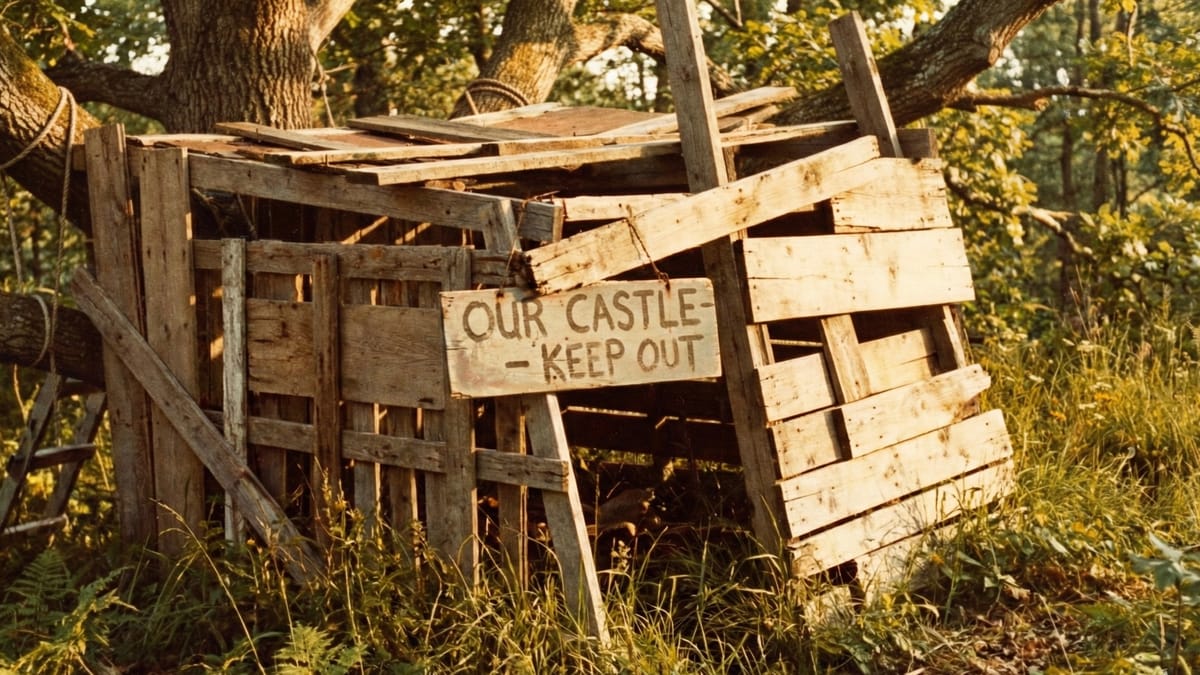
You Don’t Need Permission to Build Anymore
Before there were apps…
Before there were spreadsheets…
Before there were SaaS subscriptions…
There were forts.
You remember that feeling.
Dragging scrap wood across the yard.
Hammering crooked nails into boards.
Stacking branches against a fence line.
My dad and uncles still tell stories about building a fort in an old stone quarry — framed in with Anderson windows that were… questionably sourced from a new housing development under construction.
It wasn’t about construction quality.
It was about ownership.
You built this.
It was yours.
Your private hideaway.
Your headquarters.
Your place to sit with your friends and say, “We made this.”
There was pride in that.
There was possibility in that.
And somewhere along the way, most of us stopped feeling it.
The Weekend I Built Again
This weekend I needed to organize business expenses for taxes.
The responsible adult version of me could have:
- Bought accounting software
- Opened a spreadsheet
- Spent three hours manually entering receipts
Same three hours either way.
Instead, I opened Claude Code.
I described what I wanted:
A ledger.
Receipt ingestion.
OCR.
Mileage tracking.
Budget vs. actual.
Clean tax reporting.
And not just reporting.
I wanted it compliant with Arizona corporate tax code.
Compliant with U.S. tax code.
Aware of audit-level red flags.
Able to issue warnings the way a real accountant would.
And one by one, it started to exist.
A receipt drops into a folder.
It gets picked up.
Parsed.
Categorized.
Logged.
It flags questionable entries.
Warns me if something looks off.
Generates structured reports for my accountant.
Three hours of focused time.
Which is exactly what I would have spent manually typing data into someone else’s system.
But at the end of those three hours, I didn’t just have data entered.
I had a compliant, structured, operating system for my business finances.
And I built it.
The Jeff Spicoli Moment (Audacity)
There’s a scene in Fast Times at Ridgemont High where they crash Jefferson’s brand-new Camaro.
Total disaster.
And Spicoli looks at him and says:
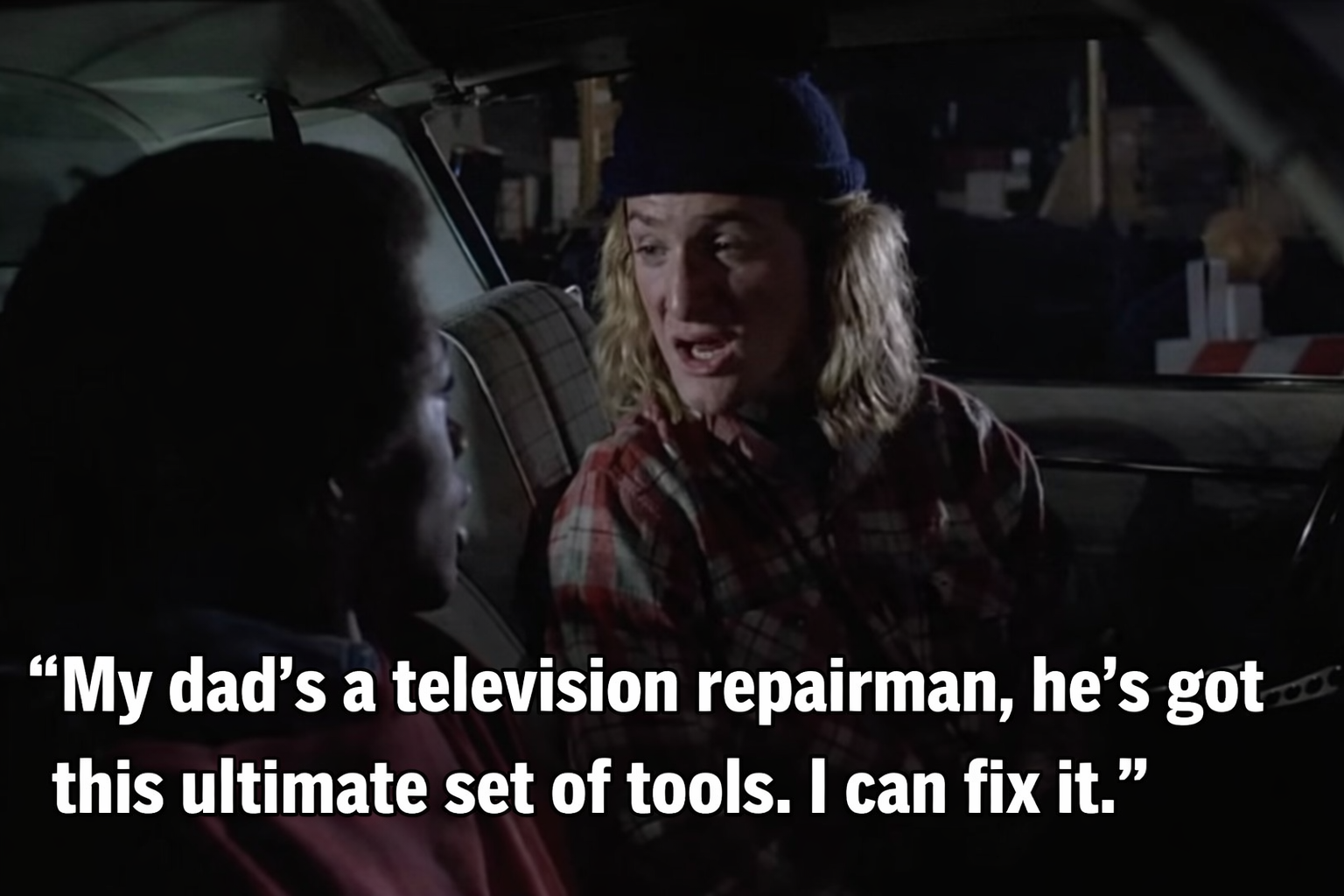
“My dad’s a television repairman, he’s got this ultimate set of tools. I can fix it.”
The optimism is ridiculous.
He probably can’t fix it.
But he believes he can.
That’s the shift.
Modern AI development tools give you that Spicoli audacity — not stupidity, but the willingness to try.
You look at a problem and instead of thinking:
“That’s too complex.”
You think:
“Let’s see.”
You start.
You experiment.
You attempt things you wouldn’t have attempted five years ago.
Not because you suddenly know everything.
Because you have access to the ultimate set of tools.
You Wanna Go Fast? (Intoxication)
Then something else happens.
Once you start moving — once the system compiles, the workflow runs, the logic connects — you feel the speed.
And that’s Ricky Bobby.
“I wanna go fast.”
This isn’t about whether you can try.
It’s about how fast you can iterate once you do.
You don’t want to wait for procurement.
You don’t want to evaluate five vendors.
You don’t want to sit in meetings.
You want to build.
You want to push it live and watch it work.
And now you can.
The speed is insane.
Not sloppy.
Tested.
Validated.
Refactored.
Structured.
Operating on an enterprise-grade platform.
You move at a level that would have taken a year before.
And when it works — when the system runs clean, compliant, useful, and real — you feel it in your chest.
That’s not recklessness.
That’s momentum.
The Same Optimism
It’s the same optimism that allowed someone without a development team to build an AI-driven golf instruction platform — one where a PGA Master Professional agent and a Kinesiologist specializing in golf movement are the actual instructors.
Not because I suddenly became either of those things.
But because I love the game, obsess over improvement, and can now assemble expertise I don’t personally hold — embedding PGA-level curriculum logic, biomechanics analysis, and motor learning science directly into the platform.
The expertise lives in the agents.
The architecture lives in the system.
Your role is orchestration.
That’s not pretending to be an expert.
That’s building a system that brings experts into the room.
The Wheel
The first person who built a wheel probably didn’t say, “Nice.”
He probably stared at it and thought:
“What else can I do with this?”
That’s the moment.
Not the pride.
The expansion.
The realization that this tool unlocks ten more things.
That accounting system I built?
It’s not revolutionary.
But now I don’t think:
“What software should I buy?”
I think:
“What else can I build?”
That’s a different mental model.
That’s not consumer thinking.
That’s creator thinking.
The Fort Is Back
Building used to feel like paperwork.
Now it feels like dragging wood into the backyard again.
Like stepping back and looking at something imperfect and thinking:
“We made this.”
There’s optimism in that.
There’s youth in that.
There’s power in that.
Not because you’re trying to disrupt an industry.
Because you’re reconnecting to the most human thing we do:
We build.
And once you feel that again — once you realize that something that would have taken a year can now be built in a weekend — you stop asking permission.
You stop defaulting to buy.
You stop assuming it’s too hard.
You look at problems differently.
You look at tools differently.
You look at yourself differently.
You remember:
“I can build that.”
And that’s a dangerous thing to remember.
In the best possible way.